12 Days Northen Circuite Route | Kilimanjaro Climbing

12 Days
  • 12
  • 65
  • 1
  • 3 Stars Hotels, Tent Camping
  • Safari Vehicles
  • 5895 Metres
  • Moshi
  • Jan, Feb, Mar, July, Aug & Sept
  • Available
  • All meals during the trek
  • English, Spanish, French
  • 5-6 Hours
  • Available

Trip Overview

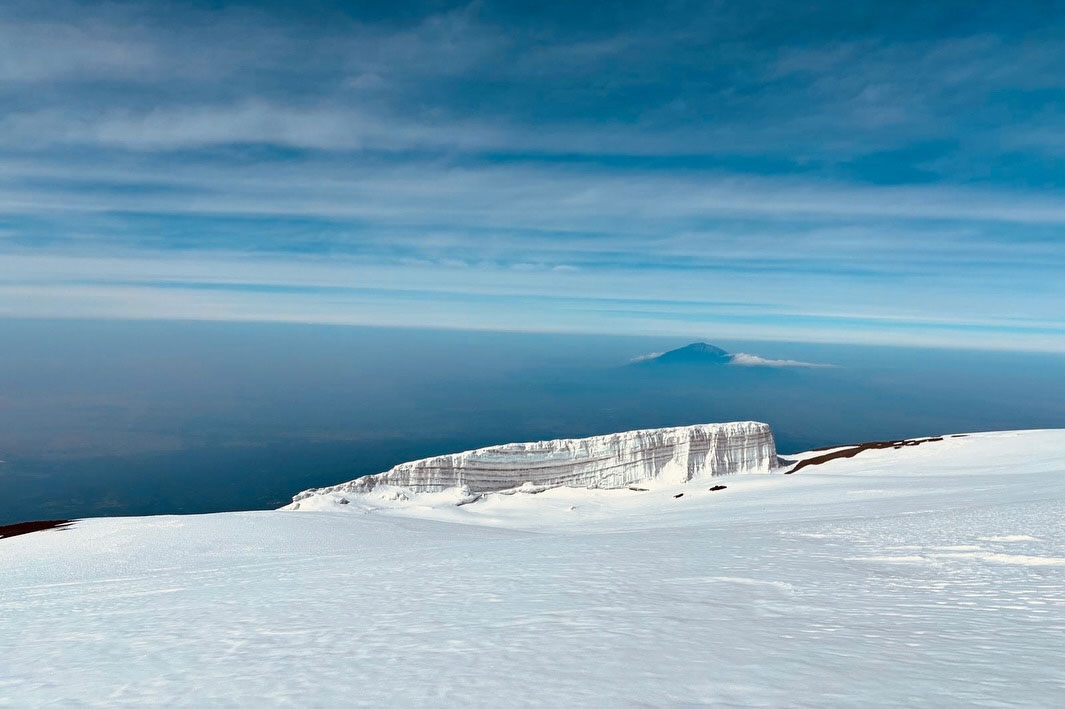
The Northern Circuit takes you up the northern slope of the mountain, where few trekkers go. The views are just amazing! It's a nine-day trek (the longest one on offer) and as such has the highest summit success rate. It's also a very pretty and varied route. We love it, and highly recommend this route to anyone keen to climb to the roof of Africa.

Highlights

  • Departure and Return Place: Moshi Town to Lemosho Gate and then back to Kilimanjaro International Airport.
  • Departure Time: Please be ready by 8:15 AM for a prompt departure at 9:30 AM.
  • Return Time: Approximately 10:30 AM on the last day.
  • Dress Code: Casual. Comfortable athletic clothing, hiking shoes, hat, cold weather jacket, gloves, pants, and spare clothing.
  • Accommodation: Two nights of accommodations based on Bed and Breakfast at 3 stars hotel (upgrades on request).
  • Customizations: Can be customized upon request, to meet traveler's needs
  • Extensions: Trip Extensions are available on request.
  • Trip Availability: All year round.

Itinerary

  • Day
    01

    Arrival in Tanzania – Kilimanjaro International Airport

    Upon your arrival at Kilimanjaro International Airport, our representative will be waiting to welcome you. You will then be transferred to Maridadi Hotel, where you can relax and recover from your flight.

    If you are already in Tanzania, we can also arrange pickup around Moshi/Arusha and transfer you to Maridadi Hotel, where the tour will begin.

    In the evening, you will meet your mountain guide for a detailed briefing. He will go over the itinerary, provide important tips, and advise you on what to wear and pack to ensure a safe and comfortable climb.

    Breakfast
    Hotel
  • Day
    2

    Hotel to Lemosho Glades (2385m) to Big Tree Camp (2780m)

    You will be picked up at your hotel at around 08:00 am and transferred to the Lemosho gate located on the western side of Kilimanjaro. After the registration process, you will still start your climb steadily through the forests of the Lemosho glades to reach Big Tree camp where you will be spending the night.


    Distance covered: 7km / 4.3mi
    Approx. time taken: 4 hours
    Meals: Breakfast, Lunch & Dinner Included

    6 hour
    Breakfast + Lunch + Dinner
    Mountain Camping Tent Stay

    High Altitude Camping

  • Day
    3

    Big Tree Camp (2780m) to Shira 1 Camp (3500m)

    Today you will trek across a plateau of grassy moorland and heather scattered with volcanic rock formations. Our destination for today is the Shira 1 Camp from where there are often views of Kibo Peak floating on the clouds. We gain a reasonable amount of altitude today and parts of the route are fairly steep.


    Distance covered: 8.5km / 5.3mi
    Approx. time taken: 7 hrs
    Meals: Breakfast, Lunch & Dinner Included

    Breakfast + Lunch + Dinner
    Mountain Camping Tent Stay
  • Day
    4

    Shira 1 Camp (3500m) to Shira 2 Camp (3900m)

    Today you will get the chance to view the Northern Ice fields from the western side of the mountain with some unusual views of Kibo. Our steady climb across the moorland of the Shira Plateau will help with acclimatization and we enjoy great panoramic views. Our destination today is the Shira 2 Camp. In the afternoon you will take an acclimatization walk then head back to camp for dinner and overnight.
     
    Distance covered: 8km / 5mi
    Approx. time taken: 5 hours
    Meals: Breakfast, Lunch & Dinner Included

    Breakfast + Lunch + Dinner
    Mountain Camping Tent Stay
  • Day
    5

    Shira 2 Camp (3900m) to Lava Tower (4,600 m /15,088 f)

    After breakfast, you will leave Shira 2 Camp (3,850 m /12,628 f) and start trekking to Lava Tower (4,600 m /15,088 f). The route is more challenging than the hikes on previous days and has more inclines and descents throughout. You may find it more physically demanding than the day before, however, it offers an ideal way to acclimatize to the high altitude. Lunch is served atop Lava Tower, allowing you 1-2 hours to rest and relax after a challenging morning.

    After lunch, you will trek a little higher and then gradually descend to Moir Hut. This camp is located on the way to the northern part of Kilimanjaro.

    Trekking time:

    5-7 hours

    Distance Distance:

    14 km (8.7 miles)

    Breakfast + Lunch + Dinner
    Mountain Camping Tent Stay
  • Day
    6

    Moir Hut to Buffalo Camp

    On this day, you will have a long but relatively easy trek. Initially, you will have a steep (although short) climb to depart Moir Valley, and then approach the northern slope of Kilimanjaro. While there will be more ups and downs on this trek, there are no steep altitude gains. This route passes close to the border with Kenya, so you will be treated to amazing views of the Tsavo and Amboseli Valleys.

    Trekking time Trekking time:

    5-6 hours

    Distance Distance:

    12 km (7.4 miles)

    Breakfast + Lunch + Dinner
    Mountain Camping Tent Stay
  • Day
    7

    Buffalo Camo to 3rd Cave Camp

    You will finish trekking up the northern slope of Kilimanjaro and stop for the night in 3rd Cave Camp, where the route will meet up with the traditional Rongai route. On this day the trekking will be shorter, and by this time your body should already have become completely acclimated to an altitude of 3,800 m / 12,464 f, which will contribute to your increased comfort and overall well-being.

    Trekking time Trekking time:

    4-6 hours

    Distance Distance:

    8 km (4.9 miles)

    Breakfast + Lunch + Dinner
    Mountain Camping Tent Stay
  • Day
    8

    3rd Cave to School Hut

    On this day you will be trekking to the School Hut Summit Camp (4,800 m /15,744 f). The actual trekking is not very hard, so remember to just choose an appropriate pace in order to keep your strength up for the next day. When you reach the camp, we recommend you sleep well, avoid strenuous activity, and drink as much water as you can, because tomorrow your group will trek into the crater.

    Trekking time Trekking time:

    4-5 hours

    Distance Distance:

    5 km (3.1 miles)

    Breakfast + Lunch + Dinner
    Mountain Camping Tent Stay

  • Day
    9

    School Hut to UHURU PEAK to Crater Camp

    ­Around midnight, you will depart from the camp and walk along the edge of the crater rim to reach the highest point in Africa, Uhuru Peak, which stands at 5,895 meters. Once you arrive at the top, you will spend about 30-40 minutes taking photos and watching an amazing sunrise with views across Africa. You can explore the nearby glaciers (just a 30-minute walk from the top) or start descending to the crater camp whenever you're ready.

    Reaching the crater floor requires much dedication, but it is well worth it! When you arrive, you will be astonished by the ancient glaciers and snow. If you want, you may choose to trek further to the Ash Pit (it takes approximately 90 minutes), or save this endeavor for the next day.

    Trekking time Trekking time:

    4-6 hours

    Distance Distance:

    5 km (3.1 miles)

    Breakfast + Lunch + Dinner
  • Day
    10

    Crater Camp to Millenium Camp

    On this day you can make another summit attempt in the morning, your general condition permitting. If you don’t want to get back to Uhuru, you can proceed with hiking out of the crater to Barafu summit camp and further down the slope to Millenium camp, your next overnight site.

    Or, if you feel like it, you can go to the Ash Pit, a still warm ice-free part of the crater with a diameter of 340 m, consisting of lava gravel (in case you didn't explore it yesterday). Its whitish-yellow sulfur slopes drop about 200 m into the depth of the volcano. Together with the Reusch crater that is encircling Ash Pit, Kilimanjaro has one of the most perfect crater shapes on earth. The amount of snow in the crater will determine the possibility of getting to the Ash Pit.

    Breakfast + Lunch + Dinner
  • Day
    11

    Trek Millennium Camp (3790m) to Mweka Gate (1630m)

    A gentle trek takes us down through the rainforest to Mweka Gate, where we complete park formalities and receive certificates, which you can hang up with pride! We are then met by our vehicles and return to the hotel in Moshi, where you can treat yourself to a hot welcome shower.

    Distance covered: 12.1km / 7.5mi
    Approx. time taken: 6 hours
    Meals: Breakfast & lunch included

    Breakfast
    Hotel
  • Day
    12

    Departure

    Today marks the end of your unforgettable adventure. Enjoy your final moments in Tanzania before our driver transfers you to Kilimanjaro International Airport for your journey home.

    If you wish to extend your holiday, we can arrange an exciting safari in Tanzania’s national parks or a relaxing beach getaway in Zanzibar to complement your Kilimanjaro experience.

Pricing

Number of Travelers in Group DiscountCost Per Traveler in US($)
1 Person$3800
2-4 People$3700
5-7 People$3600
8+ People$3500

The Cost Includes

  • Pre & Post Trek accommodation
  • Professional mountain guides, cooks and porters
  • Transportation to & from the mountain gate
  • Park fees, camping fees & rescue fees
  • 18% VAT on tour fees & services
  • Double layered Sleeping Mats
  • 3 meals daily while on the mountain
  • Filtered water throughout the trek
  • Portable toilets and toilet tents
  • Hot Water For Washing Purposes
  • Pick up and drop off at Kilimanjaro International Airport.
  • Fair wages for the mountain crew as approved by the Kilimanjaro National Park Authority (KINAPA), Kilimanjaro Association of Tour Operators (KIATO)

The Cost Excludes

  • International flights
  • Tip to the driver guide and hoteliers
  • Insurance fees
  • Cost of Visas.
  • Bank transfer charges & card payment processing fee.
  • Expenses belong to a personal nature e.g. Drinks not included on the meal plans, personal purchases, Laundry etc.

FAQs

What about solar protection?

Tanzania is very near to the equator. So the sun is always at its acme for most of the day. The sun can be fierce and cause sunburns and sunstroke. Wear a hat, shades, and use SPF sunblock lotion

I would like to book but I have group is large group, is this a problem?

We aim to keep the size of the public groups to a minimum, as we feel that a group that is much larger than ten trekkers is cumbersome and trekkers lose the sense that they are in a wilderness if there are too many people. That said, if you are a single, private group, then there is no problem accommodating you whatever the size of the group, as, of course, you will be aware before arriving in Tanzania of the number of people you will be trekking with.

Who are your operators in Tanzania?

We are. We are not agents for anybody but run the treks ourselves through our own Tanzanian company. So you can rest assured that whoever you speak to in our company has climbed Kilimanjaro – and probably many times.

Are there charging stations on Mount Kilimanjaro?

There are no charging stations on Mount Kilimanjaro. We recommend bringing Power Banks and spare batteries. There are charging ports in our safari vehicles.

Do we tip the hiking crew?

 
Yes, it is expected and much appreciated. The amount depends on the number of days, but can range from $150 and $300 per hiker. Tips are pooled and shared amongst the crew. Bring US dollar bills.

What will I eat - I am a vegetarian?

 
You will eat normal food: potatoes, rice, pasta, vegetables, eggs, sandwiches, cheese, and fruit. When you book a trek, let your tour operator know about food allergies or medical conditions that require special diets. Non-vegetarians will be served sausages, chicken, and meat. Tea, coffee, and hot chocolate will be available as well.

How long is the hike?

 
There are at least six routes to the top, Uhuru peak. You will hike between 53 and 73km depending on which route you choose. The shortest and toughest is the 5-day Umbwe route. Allowing extra days will help you to acclimatize better and improve your chances of reaching the summit. The easiest and most popular route is Marangu (which can be done in five), but we use six days for this route.

What kind of experience do I need?

 
None, but previous hiking or climbing experience will help. You need to be fit and healthy and have a good pair of worn-in hiking boots. The fitter you are the more you are likely to enjoy it.

How high is Kilimanjaro?

Mount Kilimanjaro is the highest freestanding mountain in the world and the highest mountain in Africa. Its highest point is Uhuru Peak on the Kibo crater at 5895m above sea level.

Where is Kilimanjaro?

The mountain is in Tanzania, East Africa, about 350km from the equator. The nearest towns are Moshi and Arusha.

Do You Offer Private & Fully Customizable Climbs For Kilimanjaro?

Your Kilimanjaro dream climb is entirely your own to design. We will work with you to customize exactly the triumphant Tanzanian mountainous quest experience you want. You go with the people you choose. You leave on whatever day you wish. You decide on your preferred route option, pace, and the number of days you will take

What if I have special dietary requirements?

Vegetarian, vegan, gluten-free, celiac, lactose-free, or if you have any allergies, just give us a heads up and you will be catered to

What travel documents do I need?

You will need a passport that is valid at least six months beyond your dates of travel with an entry or re-entry visa, duly endorsed.

Do you arrange airport pick up & Drop off?

Yes, we do arrange this. Please send your request to Safari.

Who are your operators in Tanzania?

We are. We are not agents for anybody, but run the treks ourselves through our own registered Tanzanian local company.

What are the Kilimanjaro accommodations like?

Your mountain camps are set up and broken down each day by expert camp porters. You’ll stay in double occupancy all-weather tents with full-ground pads to keep you and your gear dry. Private toilet tents, solar-lit dining tents with tables and chairs, and basins of hot water for washing are provided in every camp. Grand Traverse treks include upgraded solar-lit walk-in-height sleeping tents with mountaineering beds and mattresses for additional comfort.

What kind of food will I eat?

Highly-trained chefs prepare three hot nutritious meals daily, as well as trail snacks and afternoon tea each day. You’ll eat all your meals in a solar-lit dining tent with your fellow trekkers and head guide. Delicious vegetarian, vegan, gluten-free and other specialty meals can be provided (with advance request). We’re happy to send you a sample menu—just ask!

Will I see wildlife?

Prior to the climb, you’ll enjoy an acclimatization day with wildlife viewing and nature walks. Trekking through the rain forest, you’re likely to spot black-and-white Colobus monkeys, tropical birds and more.

How many hours will I trek each day?

On most routes, you’ll trek 4-7 hours most days. On certain routes you’ll trek as many as 10-15 hours on the longest days.

Do You Offer Crater Camp Option On Kilimanjaro Climbs

An overnight stop at Crater Camp is an optional extra on any customized Kilimanjaro climb , usually lasting eight actual mountain days or more on the Shira, Lemosho, Umbwe and Machame routes. Possibly the most bizarre place you will ever see, it is visited by less than 5% of the 40,000 to 50,000 people who annually ascent Kilimanjaro on a distinct highlands voyage in northern Tanzania

Do You Offer Private and Fully Customizable Climbs For Kilimanjaro

Your Kilimanjaro dream climb is entirely your own to design. We will work with you to customize exactly the triumphant Tanzanian mountainous quest experience you want. You go with the people you choose. You leave on whatever day you wish. You decide on your preferred route option, pace, and the number of days you will take.

When is the best time to climb Kilimanjaro?

Mount Kilimanjaro can be climbed anytime throughout the year. Most travelers prefer climbing during the dry seasons: December to March, June to October. Many consider the best months to climb Kilimanjaro to be January, February, and September.