6-Day Serengeti Great Migration Safari from Zanzibar

6 Days

Overview

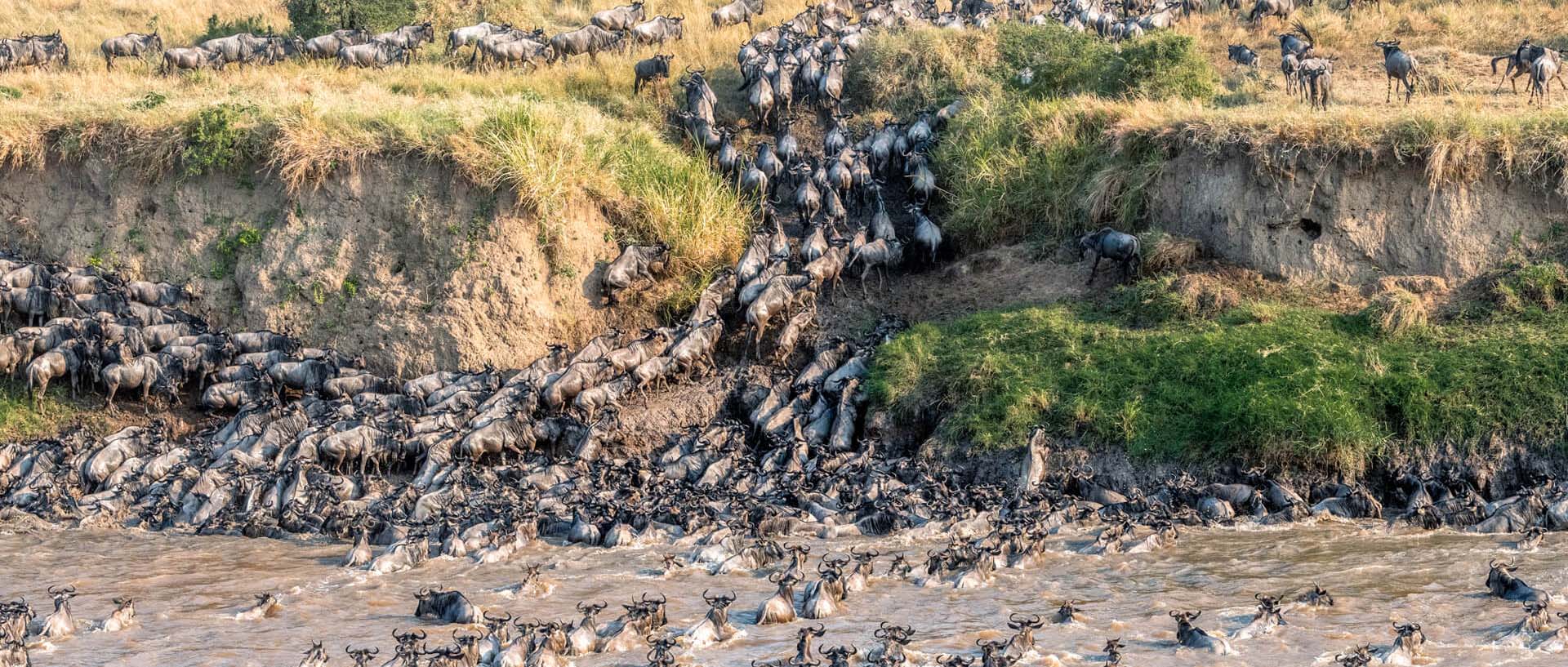
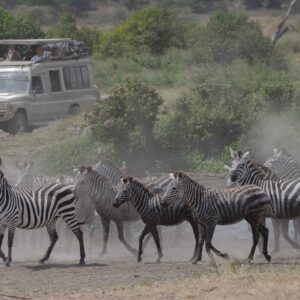
You'll love this 6-day great migration safari from Zanzibar! You'll start in Tarangire, where big elephant herds roam. Then, you will venture into the Serengeti to witness the awe-inspiring wildebeest migration. You'll end your adventure in the Ngorongoro Crater, a wildlife haven where you may spot the rare black rhinos. This unforgettable journey takes you through Tanzania’s top parks, packed with thrilling game drives and breathtaking scenery!

Highlight

  • ✈️ Scenic flight from Zanzibar to Serengeti, avoiding the long 7-hour drive
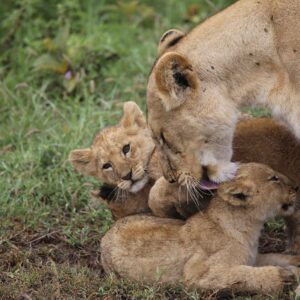
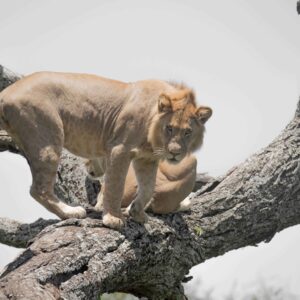
  • See thrilling predator chases as lions and cheetahs follow the herds.
  • Explore the vast plains that host this incredible migration.
  • Experience the emotional sight of thousands of wildebeest calves being born

Itinerary

  • Day
    01

    Zanzibar to Tarangire National Park

    Depending on where you’ll be staying in Zanzibar, a driver will come to pick you up at 5:00 am and drive you to Abeid Amani Karume International Airport. You’ll arrive in Arusha at 9:15 am, where a professional guide will be waiting to greet and brief you on the journey you’re about to embark on.

    After the briefing, you'll then drive for about 2 hours to Tarangire National Park.

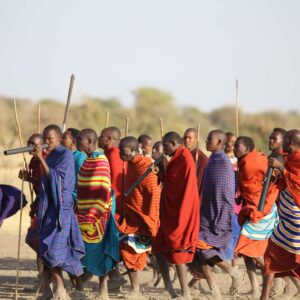
    Along the route, you'll see breathtaking views of grassland plains dotted with ancient baobab trees, traditional Maasai huts, and livestock herded by nomadic people.

    Tarangire National Park is notable for its old baobab trees, tree-climbing pythons, and the biggest concentration of African elephants, lions, leopards, and cheetahs.

    Following a midday picnic lunch, you will resume your afternoon game drive before driving to the beautiful Ngorongoro Forest Tented Lodge for dinner and an overnight stay.

  • Day
    02

    Journey to the Great Migration in Northern Serengeti National Park

    You will depart for Northern Serengeti National Park after breakfast.

    This route will take you through the Ngorongoro Conservation Area, allowing you to see the Ngorongoro Crater along the way (a breathtaking view indeed).

    Also, you can expect to encounter plenty of wildlife during this drive, as there is sometimes a significant concentration of game on the southern plains.

    On the journey, you will stop for a picnic lunch before continuing to Northern Serengeti Baobab Migration Camp, arriving in the evening.

  • Day
    03

    Across the Mara River - The Great Migration Safari

    On your second day in the Northern Serengeti, you’ll continue to enjoy the spectacular scenery and wildlife that make this region so special. With a full day dedicated to game drives, you’ll have more time to explore the open plains and river areas, increasing your chances of witnessing incredible migration activity and predator action, all while enjoying the peaceful, remote atmosphere of this remarkable landscape.

  • Day
    04

    Chasing Wildlife from Northern to Central Serengeti National Park

    Today, you will journey through the endless plains of Serengeti, following the great migration’s path. Along the way, you'll spot predators like lions, cheetahs, and leopards in action. The landscape changes as you reach Central Serengeti, a prime location for year-round wildlife encounters.

  • Day
    05

    Serengeti's Heart to the Lush Ngorongoro Highlands

    This will be your last day in the Serengeti. We'll say goodbye to the park in style!

    Following breakfast, you'll go on an early-morning game drive with a packed lunch, lasting 6 hours. You’ll get to experience what the Serengeti is famous for (stunning beauty, diverse landscapes, and amazing wildlife) for one last time.

    You’ll then head back to your campsite for lunch, grab your things, and finally drive to Ngorongoro Highlands. You'll be stopping along the way for more wildlife viewing.

  • Day
    06

    Exploring the Ngorongoro Crater and Returning to Zanzibar

    Following an early breakfast, you'll drive from Ngorongoro Marera Mountain View Lodge and then descend 600 meters into the crater for your last wildlife viewing.

    This stunning place will offer you almost every species of wildlife indigenous to East Africa, including the rare black rhino (you'll be the luckiest traveler if you spot one).

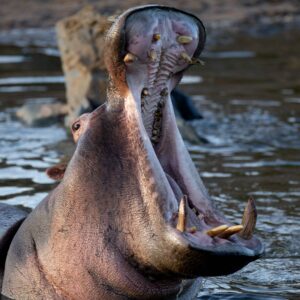
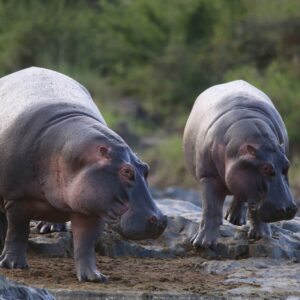
    Lunch will then be served at the crater's base about lunchtime near a hippo lake, and after that, take your last photos in the park. You'll then be transferred to Arusha, then to Zanzibar.

Number of Travelers in Group DiscountCost Per Traveler in US($)
2-4 People3295
5- People3180

Cost include

  • Destinations transfers (airport transfer)
  • Private professional safari guide
  • Private 4 x 4 safari with roof for game viewing
  • Daily bottle of mineral water during Safari
  • All meals during safari (breakfast, lunch, dinner)
  • Entrance, park fees and 18% VAT to our entrance fees

Cost exluded

  • International flights
  • Tip to the driver guide and hoteliers
  • Insurance fees
  • Cost of Visas.
  • Bank transfer charges & card payments processing fee.
  • Expenses belong to person nature e.g Drinks not included on the meal plans, personal purchases, Laundry etc.

FAQs

How much luggage is on a Tanzania safari?

Pack packs without flames are better than suitcases. This luggage may be packed on the back or in the roof rack of the safari 20 Kg ( 44 Lbs) are maximum weight.

Do I need to arrange for my own transfer on arrival?

Migration Venture Africa will pick you up and transfer you to designated Hotels. Pick up on arrival airport and drop off are included on our package. We arrange also other group transport if required.

Do we need a tourist visa to enter Tanzania?

A valid visa is required for travel to Tanzania. A passport with a minimum validity of 6 months prior to expiry is required.
A single-entry visa is valid for 3 months from the date of issue. Visas-on-arrival are available at Kilimanjaro International Airport (JRO)for US$50. (For U.S. Citizens, the cost is US$100 for a multiple entry visa.) However, it is advised that visitors traveling from a country where visa services are available should obtain a visa prior to arrival in order to avoid potential delays at the airport

What currency should we bring to spend in Tanzania?

The Tanzanian Shilling is the currency of Tanzania. The exchange rate is roughly 1 USD = 2300 TZS. (December 2024). Credit cards are not widely accepted. However, USD is accepted in most places visited by tourists. Please note that US bills printed before 2003 are not accepted in Tanzania, as there was a large amount of illegal processing of dollar bills in the country.

What language is spoken in Tanzania?

Swahili is the national language of Tanzania, but many tribal languages are spoken amongst the 120+ ethnic communities in Tanzania. English is considered the de facto official language. It is widely spoken by those who work in tourism and hospitality.

What is the climate like in Tanzania?

Summer: September to April. Temperature: 20°C to 30°C.
Winter: May to August. Temperature: 19°C to 25°C.
Rainfall: April-May (long rains) and November to mid-December (short rains).

What to Bring on Safari

Safaris are casual vacations! Dress comfortably and pack lightly. As you will be spending most of your safari viewing in the vehicle, loose-fitting and light-colored clothing is recommended. Avoid dark colors (i.e. black, dark blue) as they tend to attract unwanted attention from insects such as the tsetse fly.

SAFARI CLOTHING

  • One pair of comfortable walking shoes (i.e. sneakers, hiking shoes)
  • One pair of sandals or flip-flops
  • Casual, loose-fitting clothing
  • Swimsuit
  • One warm fleece or sweater
  • Extra Cotton socks and underwear
  • Hat
  • Lightweight jacket or windbreaker

Other items

  • Passport, plane tickets
  • S. Dollars (both large and small denominations) and credit cards
  • Sunglasses
  • Contact Lens Solution, extra contact lenses, and spare glasses.
  • If you wear contact lenses, be sure to bring a pair of glasses in case of eye irritation from the dust
  • Sunscreen (SPF 50 or higher)
  • Lip balm (SPF 45)
  • Insect repellant (DEET 30%)
  • Anti-bacterial hand sanitizer
  • Camera and extra batteries
  • UK plug adapter
  • Journal for recording daily observations and encounters
  • Yellow Fever Vaccination Certificate, if applicable
  • Small Personal Medical Kit including aspirin, anti-malarial pills, cold and allergy medicine, cream of itches (i.e. Benadryl itch relief), stomachache medicine (i.e. Pepto-Bismal), antibiotic ointment (i.e. Neosporin), prescription antibiotic effective against a broad range of bacteria including travelers diarrhea (i.e. Ciprofloxacin or also known as Cipro)

What are the park fee regulations?

All park fees and conservation fees have a 24-hour limit. We plan your itinerary according to the park permits paid. Your safari driver guide will brief you the night before and provide suggestions regarding your schedule. Please note that any penalty fee resulting from the client’s wish to extend their stay will be at the guest’s expense.

What if I have special dietary requirements?

If you have any allergies or special dietary requirements, please let us know beforehand at the time of booking, so we can advise the lodgings accordingly. Most places will be able to accommodate to your preferred meal options, though sometimes vegetarian/vegan options may be a bit limited and repetitive. If you require any special health supplement, please kindly bring it with you.

What can I expect on a typical safari day?

This is your safari trip, your adventure! You decide how you want to spend your time on this vacation. If you would like to spend a full day on safari, you are definitely welcome to do so. Safari Infinity does not restrict your mileage, fuel, or how much time you want to be on safari. While some days you may decide to set out by sunrise, other days you can have a slower-paced breakfast before starting your daily exploration. Simply sit down with your guide to plan your day and meals the night before. Your guide will have plenty of suggestions, but of course, the decision is yours.

Can we buy extra bottles of water along the safari?

Bottled water is included in the safari vehicle. You can also buy any drinks along your way to the safari. There will be mini-markets in town.

Are the guides on safari certified?

They are licensed by TALA, trained, friendly, and have years of experience!

What type of vehicles do you provide?

We use 4 or 6-passenger 4-wheel-drive Land Cruisers, all with viewing roofs for the safaris. The vehicles have an inverter for charging batteries, a radio, and a cooler.

Do you customize a tour?

Yes, just let us know what’s in your mind and we will put all together for you!

How soon do I have to book your tour?

We recommend booking your trip as soon as possible. Lodges and tented camps on safari are booked quickly, so we need to reserve those before they fill up.

Photography

You should always ask permission before taking anyone’s photograph. Many of the people in places that receive a steady stream of travelers are used to having their pictures taken and some may ask for money. You can usually tell the people who will ask for money, as they pose for pictures as their “job” and will be standing around looking for tourists, asking if you want to photograph them.

Personal Safety

Tanzania is generally a very safe country to travel to. There is petty theft in the major cities (and in Zanzibar) but this is usually targeted either at tourists who are clearly displaying their wealth (with a bulging wallet, expensive camera/watch/jewelry) or who are walking home late at night. If you follow basic precautions and use your common sense, you are very unlikely to have a problem.

There are also some basic rules that you should follow when on safari. Some of these may sound extremely obvious but you would be surprised at some of the stories we hear of other guests so we prefer to err on the side of caution!

Never ever get out of your vehicle when on safari. Even if the vehicle breaks down and you are desperate for the toilet you must remain in the vehicle. Many animals are remarkably camouflaged and you may not see them nearby. Whilst in the jeep you are safe as they just see this as a big target; the moment you get out of the vehicle you may suddenly be seen as prey. All vehicles are counted in and out of the park so if you do break down, the park rangers will soon find you.

If you do need the toilet when on a safari drive, please try to give the driver as much notice as possible. They will find a big open area where they are happy that it is safe for you to stop. Unfortunately, you will usually not be given a bush to hide behind as you never know what else may be behind that bush! The drivers will be respectful and look the other way (or ‘check the tire pressure which is the local euphemism for a pee stop!).

Don’t wave anything outside the car or stick your arms out. This can be seen as a sign of aggression and in extreme cases, could cause an elephant to charge the vehicle.

Always follow the instructions of your guide, no matter how strange they may seem. This is particularly important when on a walking or canoeing safari but applies at any time.

If staying in a tented camp, never leave your tent once it is dark without asking for one of the rangers who will be patrolling the property to accompany you. If you are traveling with younger children, you should ensure that one adult is in the tent with them.

Always wear shoes and socks when walking around the bush (rather than flip-flops). This provides a level of protection against biting insects, snakes, and scorpions.

Tipping

Tipping is very much an integral part of tourism in Tanzania and wages are generally low and are then supplemented by tips. The following guidelines should help you to work out how much to tip, but you should remember that tipping is discretionary and it is up to you whether you tip or not. If you have not received a good service, you do not need to tip whereas if the service has been particularly good, you might want to give more than we suggest.

We have quoted amounts in GBP but it is generally best to tip in either local currency or US dollars.
Concierges – $2-$3 when checking in and checking out
Drivers / Guides – approximately $20+ per day
Housekeeping staff – $2-$5 per day (there will often be a tip box in the hotel reception where you can leave a tip that will be distributed amongst the hotel staff)
Waiters – Most meals are included so you will not be given a bill. However, if purchasing drinks from the bar it would be customary to leave a tip of around 10%

Health

You should consult your doctor about what vaccinations are required for travel to the region and check whether they recommend the use of malarial prophylactics. Please note that a yellow fever certificate is required by the authorities in Tanzania if your international flight has routed through Kenya, Ethiopia, Dubai and a number of other countries. Please check this with us so that we can provide advice depending on your airline.